Tuesday, 28 October 2014

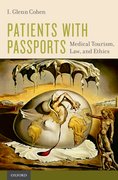
New book: I. Glenn Cohen's Patients With Passports

The first two chapters of I. Glenn Cohen's new book (out in Dec. 2014 with Oxford Univ. Press), Patients With Passports, are available here: http://papers.ssrn.com/sol3/papers.cfm?abstract_id=2514371

Abstract:      
Can your employer require you to travel to India for a hip replacement as a condition of insurance coverage? If injury results, can you sue the doctor, hospital or insurer for medical malpractice in the country where you live? Can a country prohibit its citizens from helping a relative travel to Switzerland for assisted suicide? What about travel for abortion? In his new book, Patients with Passports, just released by Oxford University Press, he tackles these important questions, and provide the first comprehensive legal and ethical analysis of medical tourism.

Medical tourism (or "medical travel") is a growing multi-billion dollar industry involving millions of patients who travel abroad each year to get health care. Some seek legitimate services like hip replacements and travel to avoid queues, save money, or because their insurer has given them an incentive to do so. Others seek to circumvent prohibitions on accessing services at home and go abroad to receive abortions, assisted suicide, commercial surrogacy, or experimental stem cell treatments.

This material the press has allowed him to upload to SSRN for distribution includes the front matter and the first two chapters of the book.

The "Preface" chapter introduces the book and the scope of medical tourism through the stories of six sets of medical tourists (some real persons, others composite) that sketch the very different needs, hopes, and experiences of patients traveling for care.

A second chapter, "An Introduction to the Medical Tourism Industry," introduces the industry at a more theoretical and data-centered level. It describes various ways of dividing the industry and brings together all the best existing available data to give a thick descriptive account of the industry and its major players: home country governments, destination country governments, destination country hospitals and their staffs, accreditors, facilitators, insurers, home country partner hospitals, and industry associations.

As these chapters and the book itself demonstrates, very different patients are traveling for very different reasons that raise very different legal and ethical issues. Some patients are traveling for cardiac bypass and other legal services to places like India, Thailand, and Mexico. He analyzes among other things issues of quality of care, disease transmission, liability, private and public health insurance, and the effects of this trade on foreign health care systems. Other patients are using medical tourism to attain services illegal in the patient's home country, such as organ purchase, abortion, assisted suicide, fertility services, and experimental stem cell treatments. Here, he examines issues such as extraterritorial criminalization, exploitation, immigration, and the protection of children.

Through compelling narratives, expert data, and industry explanations, his goal is to connect the reader to the most prevalent legal and ethical issues facing medical tourism today.

Friday, 26 September 2014

Upcoming: Medical Tourism Summit, Melbourne, Australia - 20-21 Nov. 2014

Medical Tourism Summit
Understanding medical tourism and how recent changes will impact Australia

20-21 November 2014 | Rendezvous Grand Hotel Melbourne

http://www.informa.com.au/conferences/health-care-conference/medical-tourism-summit

The Inaugural Medical Tourism Summit will examine the implications of recent changes within the medical tourism industry and the impact on the Australian market. In the last few years, Australia has begun to see more and more tourists arriving to receive medical treatments, including cancer treatment, heart surgery and IVF.
Meanwhile, NIB Health Funds has announced that they will offer insurance for Australian’s heading overseas for dental and cosmetic surgery, with plans to eventually expand this service to cover other forms of medical tourism.
The conference program will also address:
  • The current state of the industry
  • The risks
  • Australian services and marketing
  • Legislative challenges

Agenda

CONFERENCE DAY ONE
Thursday 20th November 2014
The Current State of Medical Tourism
9.00      Medical tourism: Opportunities and threats in a Globalised world
With the availability of efficient modern transportation, it is possible to travel long distances in a short period of time in today's environment. As international tourism developed, so has the investment in infrastructure to cater for the tourism industry, from which medical tourism has had the opportunity to develop alongside on an international scale. This presentation examines the scope and challenges of medical tourism in a globalised world. The globalisation of markets and production, provide the medical tourism industry opportunities similar to those available to other service and manufacturing industries. Accordingly, the supply and demand create opportunities and threats to the industry. In addition, there are the ecological threats posed by the microbial world to manage in this industry. A holistic approach is necessary for the sustainability of this global industry.
Dr Christine Lee, Lecturer at the School of Business and Economics at Federation University
9.40      Why people travel for medical care: what we know and don't know
This presentation summarises the latest social science research on the reasons people seek medical treatment overseas. Patterns of travel differ for various groups and nationalities of people and by treatments sought, and appears to fluctuate. Research remains limited, due to the difficulties in accessing a mobile population, lack of consistent statistical enumeration and because much of the information is considered commercial in confidence. Although emphasis is placed upon individual decision-making, governments and regulations as well as insurers and tie-in contracts are important in shaping the trade in medical services.
Associate Professor Andrea Whittaker, ARC Future Fellow in Anthropology in the School of Social Sciences, Monash University
10.40      CASE STUDY: The Patient Experience
A patient's experience is broader than just the clinical aspects of care - all of the various non-clinical interactions impact their experience. Because patients are often at their most vulnerable while receiving health care services, each interaction takes on added significance. All of these interactions, or touch points, are the basis of 'The Patient Experience'. Each touch point offers the health care provider the opportunity to deliver unique benefits to the patient and to create a platform for differentiation and competitive advantage.
Cassandra Italia, Managing Director, Healthcare Hands and Global Health Travel, Thailand

The Risks

11.20      Medical tourism and bioethics: Imprints left by the global neoliberalisation of health
Internationally, healthcare has been intensively privatised and commercialised over the past 20 years. Medical tourism has emerged in this context as an economic development strategy for many developing nations, and provisional remedy to the rising costs and waiting lists for healthcare in developed nations. Through a focus on research carried out in India, this paper will explore how medical tourism provides a window through which to view some of the broader, exploitative economic practices occurring within and between nations. It will also discuss how national and international regulation can guard against predatory practices and promote social justice, or alternatively, exacerbate current inequalities.
Kristen Dawn Smith, Research Fellow for the Centre for Health and Society at the Melbourne School of Population and Global Health, University of Melbourne
1.00      CASE STUDY: Travails of hope and the real cost of stem cell tourism
Buoyed by the promise of regenerative medicine, Australians are pursuing 'stem cell' treatments - both abroad and within Australia - in increasing numbers. Often referred to as 'stem cell tourism', this emerging service industry is a discrete and worrying sub-set of the medical tourism sector. Rather than offering access to established techniques and medical procedures, the 'stem cell' tourist is being sold unproven interventions with little or no evidence to substantiate the claims made - and high fees charged - by providers. Indeed the potential cost extends far beyond financial considerations for the individual, with real implications for the biotechnology community.
Dr Megan Munsie, Head of Education, Ethics, Law and Community Awareness Unit at the University of Melbourne; Policy and Outreach Manager at Stem Cells Australia
1.40      Does medical tourism trivialise the severity of plastic surgery?
Dr Tim Papadopoulos, President of the Australasian Society for Aesthetic Plastic Surgery

Marketing and public relations

2.40:        The need for a systematic and integrated approach to develop the medical tourism industry
Dr Hemani Thukral, Director of Medical Tourism, Australia Indian Travel & Tourism Council; Managing Director, MyMedicalChoices
3.20      CASE STUDY: The difficulties of trying to develop a medical tourism market for Australia
  • Early attempts to define and establish the sector
  • Early conferences, their findings and resolutions
  • Attitudinal and structural hurdles
  • The "tourism" side of medical tourism
  • The ongoing opportunity
Matthew Hingerty, CEO and Managing Director, Barton Deakin
4.00       Measures to Develop and Promote “Down-Under Medical Tourism Hub”
Medical tourism is one of the fastest growing multi-million dollar global healthcare service industries. It is also  known as healthcare tourism, medical outsourcing, medical refugees, international medical travel, bio-tech pilgrims - where patients seek cost effective, first world quality of heath-care with latest medical technology in another country. It is a complex phenomenon influenced by interactions between medical, economic, social, legal, ethical, and political factors operating either singly or in combination, such as high health and insurance costs, globalisation, digitisation, regulation, long waiting periods, and non-availability of treatment. Medical tourism combines access to invasive, diagnostic, cosmetic and alternative lifestyle healthcare services with exotic locations, medical specialist and caring local staff, and travel itineraries. It incorporates the appeal of achieving positive health outcomes for improving once quality of life, with the adventure of heritage, spiritual, and cultural tourism. Therefore, in order to be competitive medical tourism development, information distribution and promotion should be of great interest to Australian marketers, medical profession, policy makers and medical tourism industry as a whole.
Anita Medhekar, Senior Lecturer in Economics, Central Queensland University
CONFERENCE DAY TWO
Friday 21st November 2014

8:00      Morning coffee and networking

8:50      Opening remarks from Chair
Legislation

9:00      Issues associated with transnational reproductive treatment
Australians have been prolific users of assisted reproductive treatment in other countries, predominantly for surrogacy arrangements and donor treatment in Asia and the USA. Strong regulation and quality assurance mechanisms in Australia offer protection for all parties, minimising risks and looking after the interests of children born from assisted reproductive treatment. However, hundreds of Australian travel overseas for treatment. Current health, social and legal issues for all parties involved from transnational reproductive treatment arrangements and considerations for minimising risks will be explored. The interests of children born, the intending parents and surrogates will be explored.
Louise Johnson, CEO of the Victorian Assisted Reproductive Treatment Authority

9:40      The physiological effects of flying on the human body and the impacts of this on medical tourism - a discussion of the legal claims available in aviation against the airlines in domestic and international travel
  • A consideration of illnesses and injuries sustained aboard flights
  • A discussion of claims against the airlines
  • A comparison of physical injuries versus mental illness
  • An analysis of the effects of aviation injuries and illnesses on medical tourism
Dr Michael Spisto, Senior Lecturer in the College of Law & Justice, Victoria University

10.20      Morning tea

10:40      Controversies in Obstetric and Reproductive Medical Tourism
  • Accessibility - Examining Australians traveling overseas for IVF due to lower costs as well as access to services prohibited by Australian Law
  • When it all goes wrong - Case examples including evaluation of Baby Gammy's Case
  • Legal Considerations - Is the problem with our law?
  • Other matters - issues that you might not have thought of
Dr Vinay Rane, Medical Vice-President of the Medico-Legal Society of Victoria
NIB

11.20      Borderless healthcare
People worldwide are increasingly crossing borders for medical treatment driven by greater mobility, reduced trade barriers, competition and search for quality. Some emerging countries are likely to "outsource" their healthcare provision due to existing supply not being able to keep pace with rising "wealth" driven demand. NIB Options is seeking to take advantage of this thematic. Initial efforts are focusing upon cosmetic and dental treatment in Australian domestic market. This includes an option of being treated by Australian doctors. The ultimate goal will be to expand into medical treatment and sell cosmetic/dental/medical treatment products in foreign markets. Australian inbound opportunities for doctors, dentists and hospitals are enormous.
Mark Fitzgibbon, CEO of NIB Health Funds
What Australia Has To Offer

12.00      Why Australia's IVF programs are drawing international patients to Australia
Lyndon Hale, Medical Director of Melbourne IVF

12.40      Lunch

1.40      CASE STUDY: The difficulties of trying to develop a medical tourism market for Australia
  • Early attempts to define and establish the sector
  • Early conferences, their findings and resolutions
  • Attitudinal and structural hurdles
  • The "tourism" side of medical tourism
  • The ongoing opportunity
Matthew Hingerty, CEO and Managing Director, Barton Deakin

2.20      The impact facilitators make on the medical tourism industry
  • The evolution of facilitators
  • Why providers need facilitators
  • Why patients choose a facilitator
  • Responsible supply chain leverage
  • When things don't go to plan
  • The future for facilitators
Christyna Kruczaj, Director of CosMediTour

3.00      Afternoon tea
Medical Tourism in Australia

3.20      Challenges in providing low cost high quality cosmetic surgery performed by Australian trained fully qualified FRACS plastic surgeons in Australia
Dr Kim Chan, Medical Director of Breast Academy

4.00      The overseas market and what Australia can learn

Mr Daniel Donner, Medical Director of SkyGen

4.20        The future of medical tourism    
  • Where will Australia fit in the grand scheme
  • Specialisation 
  • Licensing
  • Packaging 
Christian Fletcher-Walker, Co-Founder and CEO of Wotmed

  5.20     Closing remarks from Chair

5.30      End of conference

Wednesday, 27 August 2014

New article: 'Medical tourism in Malaysia: How can we better identify and manage its advantages and disadvantages?'

Ormond, M., Wong, K.M. and Chan, C.K. (2014) 'Medical tourism in Malaysia: How can we better identify and manage its advantages and disadvantages?' Global Health Action, 7(25201). 
Available HTTP: http://www.globalhealthaction.net/index.php/gha/article/view/25201 (free/open access)

Abstract
Following on the identification of medical tourism as a growth sector by the Malaysian government in 1998, over the last 15 years significant governmental and private-sector investment has been channelled into its development. This is unfolding within the broader context of social services being devolved to for-profit enterprises and ‘market-capable’ segments of society becoming sites of intensive entrepreneurial investment by both the private sector and the state. Yet the opacity and paucity of available medical tourism statistics severely limits the extent to which medical tourism’s impacts can reliably assessed, forcing us both to consider the real effects that resulting speculation has itself produced and to re-evaluate how the real and potential impacts of medical tourism are -- and should be -- conceptualised, calculated, distributed and compensated for. Contemporary debate over the current and potential benefits and adverse effects of medical tourism for destination societies is hamstrung by the scant empirical data currently publicly available. Steps are proposed for overcoming these challenges in order to allow for improved identification, planning and development of resources appropriate to the needs, demands and interests of not only medical tourists and big business but also local populaces.


Keywords
medical tourism industry; statistical data; destination countries; healthcare commodification; public–private health care investment; entrepreneurial state; Southeast Asia


This article is part of a special issue in Global Health Action on ASEAN integration and its healthcare implications. Full list of articles:
Progress toward universal health coverage in ASEAN
Hoang Van Minh, Nicola Suyin Pocock, Nathorn Chaiyakunapruk, Chhea Chhorvann, Ha Anh Duc, Piya Hanvoravongchai, Jeremy Lim, Don Eliseo Lucero-Prisno III, Nawi Ng, Natalie Phaholyothin, Alay Phonvisay, Kyaw Min Soe, Vanphanom Sychareun
Role of occupational health in managing non-communicable diseases in Brunei Darussalam
Pg Khalifah Pg Ismail, David SQ Koh
Human resources for health: task shifting to promote basic health service delivery among internally displaced people in ethnic health program service areas in eastern Burma/Myanmar
Sharon Low, Kyaw Thura Tun, Naw Pue Pue Mhote, Saw Nay Htoo, Cynthia Maung, Saw Win Kyaw, Saw Eh Kalu Shwe Oo, Nicola Suyin Pocock
Policy processes underpinning universal health insurance in Vietnam
Bui T. T. Ha, Scott Frizen, Le M. Thi, Doan T. T. Duong, Duong M. Duc
Innovations in non-communicable diseases management in ASEAN: a case series
Jeremy Lim, Melissa M.H. Chan, Fatimah Z. Alsagoff, Duc Ha
Disasters, resilience, and the ASEAN integration
Don Eliseo Lucero-Prisno III
Medical tourism in Malaysia: how can we better identify and manage its advantages and disadvantages?
Meghann Ormond, Wong Kee Mun, Chan Chee Khoon
The ASEAN economic community and medical qualification
Jathurong Kittrakulrat, Witthawin Jongjatuporn, Ravipol Jurjai, Nicha Jarupanich, Krit Pongpirul
Has decentralisation affected child immunisation status in Indonesia?
Asri Maharani, Gindo Tampubolon
Obesogenic television food advertising to children in Malaysia: sociocultural variations
See H. Ng, Bridget Kelly, Chee H. Se, Karuthan Chinna, Mohd Jamil Sameeha, Shanthi Krishnasamy, Ismail MN, Tilakavati Karupaiah
Horizontal inequity in public health care service utilization for non-communicable diseases in urban Vietnam
Vu Duy Kien, Hoang Van Minh, Kim Bao Giang, Lars Weinehall, Nawi Ng

Wednesday, 6 August 2014

Final project report now available: "Sun, Sea, Sand and Silicone: Mapping Cosmetic Surgery Tourism"

The final report for the ESRC-funded 'Sun, Sea, Sand and Silicone Aesthetic Surgery Tourism' project, led by Prof Ruth Holliday (University of Leeds, UK), is now available online.  Check out: https://www.academia.edu/7768861/Sun_Sea_Sand_and_Silicone_Mapping_Cosmetic_Surgery_Tourism_-_Final_Report 

Executive Summary:
This multi-site, mixed methods project charted the experiences of British, Chinese and Australian patients travelling abroad for cosmetic surgery. Cosmetic surgery tourism is a fast developing industry that incorporates novel forms of labour and organisational structures that cross national boundaries, as well as drawing together pre-existing medical and tourism infrastructure. 

While medical tourism has often been characterised as wealthy patients from the global south travelling to the global north for high quality medical treatment unavailable at home, cosmetic surgery patients often travel from global north to global south, but these patients are on modest incomes. Despite this they can sometimes access upmarket private hospitals beyond their reach back home, made possible by favourable currency rates, cheap flights and lower labour costs outside the richest countries in the world.UK and Australian patients travelled for surgeries that were popular back home – such as breast augmentation and uplift, ‘tummy tuck’,rhinoplasty and liposuction. Others travel regionally, for example within Europe, often also motivated by cost savings. 

There are important exceptions to this pattern: Chinese patients travelling to South Korea access more expensive but high quality cosmetic surgery unavailable back home. Here patients from abroad often seek particular types of surgery prevalent amongst South Koreans, for example eye or jawbone surgery, or high tech surgery, such as breast augmentation using the patient’s own fat and stem cells. Patients therefore travel from global north to global south, across regional borders, and many are also ex-patriates. UK patients in Spain were most usually already living in Southern Spain or Gibraltar. 

Monitoring the movements of cosmetic surgery tourists is important in predicting health tourism in the future. As public healthcare systems are increasingly squeezed, patients become consumers in search of cut price procedures, taking on the risks of the choices they make. This research aimed to broaden understandings of surgical tourist experiences, the organisations involved, and the implications for globalized healthcare organised around consumption and markets.


Tuesday, 15 July 2014

New article: 'More than medical tourism: Lessons from Indonesia and Malaysia on South-South intra-regional medical travel'

We have a new article out! 
Ormond, M. and Sulianti, D. (2014) 'More than medical tourism: Lessons from Indonesia and Malaysia on South-South intra-regional medical travel', Current Issues in Tourism. DOI: 10.1080/13683500.2014.937324. Available HTTP: http://www.tandfonline.com/doi/full/10.1080/13683500.2014.937324  

Abstract
While scholars increasingly acknowledge that most contemporary international medical travel comprises South–South flows, these have gone curiously unexamined. Rather, policy, scholarly and media attention focuses predominantly on North–South flows of ‘medical tourists’. However, this focus diverts attention from the actual and potential impacts of South–South intra-regional medical travel flows on both their source and receiving contexts. As such, we present findings from a study examining South–South intra-regional medical travellers' motivations, preparations and practices to better understand the social, economic and political situations that condition them and their effects on the destinations that receive them. Our study of Indonesian medical travellers pursuing health care in Malaysia draws on 35 semi-structured interviews with Indonesian patients, their companions, medical staff and agents in both countries. From this, we suggest that South–South medical travellers' diverse socio-economic conditions shape decision-making and spending behaviour relative to treatment, accommodation and transport choices as well as length of stay. We identify ways in which informal economies and social care networks sustain the formal medical travel industry. Finally, we observe how medical travel increasingly serves as a means through which chronic and everyday health needs are met through temporary, visa-free intra-regional movement.

Keywords
Cross-border health care; Medical tourism; Intra-regional tourism; South-South migration; Regional alliances; Development

Media coverage
- International Medical Travel Journal. (2014) 'Malaysia: New report provides lessons from Indonesian medical travellers going to Malaysia', IMTJ, 26 June. Available HTTP: http://www.imtj.com/news/?entryid82=443522
- Simpson, D. (2014) 'Medical tourism: Not just about price', CABI News, 30 June. Available HTTP: http://www.cabi.org/leisuretourism/news/23916 

Sunday, 8 June 2014

New article: "Solidarity by demand? Exit and voice in international medical travel – The case of Indonesia"

New article out!

Ormond, M. (2014) "Solidarity by demand? Exit and voice in international medical travel – The case of Indonesia", Social Science and Medicine. doi:10.1016/j.socscimed.2014.06.007  - http://authors.elsevier.com/sd/article/S0277953614003669


Highlights

• Embeds international medical travel in travellers’ home health system struggles.
• Conceptualises international medical travel as a form of political engagement.
• Analyses the impacts of international medical travel on travellers’ home contexts.
• Provides evidence of political and social change at micro and macro levels.
• Offers novel insight into the impacts of Indonesian medical travel on Indonesia.

Abstract

Globally, more patients are intentionally travelling abroad as consumers for medical care. However, while scholars have begun to examine international medical travel's (IMT) impacts on the people and places that receive medical travellers, study of its impacts on medical travellers' home contexts has been negligible and largely speculative. While proponents praise IMT's potential to make home health systems more responsive to the needs of market-savvy healthcare consumers, critics identify it as a way to further de-politicise the satisfaction of healthcare needs. This article draws from work on political consumerism, health advocacy and social movements to argue for a reframing of IMT not as a 'one-off' statement about or an event external to struggles over access, rights and recognition within medical travellers' home health systems but rather as one of a range of critical forms of on-going engagement embedded within these struggles. To do this, the limited extant empirical work addressing domestic impacts of IMT is reviewed and a case study of Indonesian medical travel to Malaysia is presented. The case study material draws from 85 interviews undertaken in 2007-08 and 2012 with Indonesian and Malaysian respondents involved in IMT as care recipients, formal and informal care-providers, intermediaries, promoters and policy-makers. Evidence from the review and case study suggests that IMT may effect political and social change within medical travellers' home contexts at micro and macro levels by altering the perspectives, habits, expectations and accountability of, and complicity among, medical travellers, their families, communities, formal and informal intermediaries, and medical providers both within and beyond the container of the nation-state. Impacts are conditioned by the ideological foundations underpinning home political and social systems; the status of a medical traveller's ailment or therapy; and the existence of organised support for recognition and management of these in the home context.

Keywords

Political consumerism; Healthcare advocacy; Health social movements; Medical tourism; Citizenship; Resistance; Indonesia; Malaysia

Media coverage
International Medical Travel Journal. (2014) ‘Malaysia, Indonesia: New study highlights impact of medical travel on domestic healthcare’, IMTJ, 7 August. Available HTTP: http://www.imtjonline.com/news/?EntryId82=445586

Wednesday, 4 June 2014

Session on Migration and Health at the 46th Asia-Pacific Academic Consortium for Public Health (APACPH) Conference

Dates: 17-19 October 2014
Venue: Hilton Kuala Lumpur, in Kuala Lumpur, Malaysia

The theme for this upcoming conference is “Evolution of Public Health in the Asia Pacific Region”. The conference is expected to be one of the largest ever. This conference objectives are to provide updates on public health challenges in the face of demographic and epidemiological transitions in the Asia Pacific region, to disseminate successful efforts by countries in the region to counter these public health challenges, to provide a regional platform for collaborations aimed at improving competencies in public health practices and to reiterate the Asia Pacific public health fraternity’s stand that access to adequate health care for all is an important component of human rights.

For this conference, Prof Chan Chee Khoon (University of Malaya, Malaysia) has organised a session on 'Migration and Health'.  
  • Date: 18 October 2014 
  • Time: 1200-1300
  • Venue: Sentral Ballroom A
  • Chair: Professor Dr. Chan Chee Khoon, University of Malaya (Malaysia)
  • Co-chair: Associate Professor Dr. Saimy Ismail, University of Malaya (Malaysia)
  • Presentations
    • O7-01: Universal Health Coverage and Migrant Populations' Access to Health Care: Case Studies of Thailand and Malaysia
      • Sharuna Elizabeth Verghis, Health Equity Initiatives Malaysia

    • O7-02: Foreign-ness and Health Care in Malaysia
      • Meghann Ormond, Wageningen University
    • O7-03: Health Care Professional vs. Domestic Worker: Recent Policy Debates and Implications for Indonesian Nurses and Care Workers in Japan
      • Deborah J. Milly, Virginia Tech University

Monday, 2 June 2014

CFP: Tourism & Ageing International Conference, Lisbon, 26-29 November 2014

ISCTE – Lisbon University Institute (www.iscte-iul.pt) and Audax-IUL(http://audax.iscte.pt/) are organising an international conference on the theme of Tourism and Ageing(http://taconference2014.iscte-iul.pt) that will take place on 26-29 November 2014 at Cascais.

The Tourism & Ageing conference is the first European initiative in this field, with the aim of discussing the influence of ageing on the tourism industry world-wide, with the most respected national and international academic and professional experts.
 
The main goals of this conference are:
  • To identify and to discuss the "state of the art" of the key issues of Tourism and Ageing, globally;
  • To place this conference as an enabler for knowledge about key topics in the field, such as Senior Tourism, Medical Tourism, Health and Wellness, and Marketing. For this purpose, will be held workshops for case studies discussion, in close collaboration with companies, professionals and academia;
  • To contribute to schedule a real agenda of the Health Tourism and Medical Tourism to Portugal.
The submission of all manuscripts should be done to site http://taconference2014.iscte-iul.pt
For more information about submissions, contact Joana Neves (Conference Chair and Researcher at UNIDE, ISCTE-IUL)at tourism.ageing.academic@iscte.pt
 

Saturday, 24 May 2014

Upcoming conference on medical tourism - Rikkyo University, Niisa, Japan - 18-19 July 2014

Medical Tourism In Asia: Current Trends and Issues
Conference Programme

18 July 2014 - At Rikkyo University, Niiza campus (In English)
11:00-12:30 Welcome / Opening remarks by Tsutomu INAGAKI
Session 1: Medical tourism and national development policy

  • Mika TOYOTA ‘Medical tourism as national economic development in Asia: comparative case study of Singapore and Thailand versus Japan and Taiwan’
  • Toshiki MANO ‘The situation of medial tourism policy in Japan and Asia’
  • YANXIA Zhang ‘The rise of Chinese birth tourism: getting on the fast track to superior citizenship’

12:30-13:30 Lunch Break 

13:30-15:00 Session 2: Medical tourism as a service industry


15:00-15:30 Break 

15:30-17:00 Session 3: Reproductive travel and ethics

  • Danicar MARIANO ‘The Bioethics Advisory Committee’s role in motivating Singaporeans to become Fertility Tourists’
  • CHEE Heng Leng ‘Moral Discourse in medical tourism’
  • Andrea WHITTAKER ‘From intimate industry to rotten trade: reproductive travel in Southeast Asia’
  • Session Commentator: Meghann ORMOND


19 July 2014 - At Rikkyo University, Ikebukuro campus (With simultaneous English-Japanese interpretation)
13:00-14:05 Keynote / 基調講演 

  • Speaker: Andrea WHITTAKER (Monash University, Australia / モナシュ大学) ‘Questions, controversies and challenges in cross border reproductive care in Asia’
  • Commentator: Namie TSUJIGAMI, Associate Professor, University of Tokyo / コメンテーター 辻上 奈美恵 (東京大学 特准教授)

14:05-14:15 Break / 休憩

14:15-16:00 Panel session - The current state of medical tourism in Asia and its challenges / パネル発表 7名の発表者がアジアの医療ツーリズムの現状分析と課題を提示 
Moderator: Shinji SHIGEMATSU, Professor Emeritus, Nagoya University) / [司会者: 重松伸司 名古屋大学 名誉教授 ]

  • Overview of Asia - アジア圏の医療ツーリズムの特色と概要 (Meghann ORMOND, Wageningen University, The Netherlands) 
  • Japan - 日本の事例 (Toshiki Mano, Tama University / 真野俊樹、多摩大学)
  • Korea - 韓国の事例 (Timothy LEE, Ritsumeikan Asia Pacific University / 立命館アジア太平洋大学)
  • India - インドの事例 (Masanori KONDO, International Christian University / 近藤正規、国際基督教大学)
  • Thailand - タイの事例 (Mika TOYOTA, Rikkyo University / 豊田三佳、立教大学)
  • Malaysia - マレーシアの事例 (CHEE Heng Leng, Universiti Sains Malaysia, Malaysia)
  • Singapore - シンガポールの事例 (Danicar MARIANO, National University of Singapore, Singapore)
16:00-16:20 Break / 休憩 

16:20-17:00 Discussion / ディスカッション

Thursday, 8 May 2014

Tourism and travel-related sessions at the 2014 ISA World Congress of Sociology - Yokohama, Japan

Planned sessions and dates/time subject to further changes -- visit http://www.isa-sociology.org/congress2014/rc/rc.php?n=RC50


In alphabetical order:

Thursday, July 17, 2014: 03:30 PM - 05:20 PM

Beyond the Gaze. Tourist Experiences with Senses Other than Sight

Session Organizer
Jens Kr. Steen JACOBSEN, Institute of Transport Economics, Norway, jsj@toi.no
There is more to travel than sightseeing: travel experiences are not just in the eye of the beholder but also in the ears, palate, nose and hands. Tourist experiences are both corporeal and multisensory, although vision is a dominant mode of consciousness in the modern world and some 90% of our perceptual intake is visual – while much of the rest is auditory and tactile. What one might call polysensualism in tourism is a manifestation of the increased use of senses other than vision in travel experiences. Tours are partly about new tastes, smells, sights, sounds and other feelings. Taste is perhaps considered more important than smell as a desirable and sought-after experience of place. Food is to a certain extent regarded as a central ingredient in place sensation. Because people cannot stop sounds, they are especially vulnerable to sounds in the experience of place. Haptic tourist experiences are also under-researched, that is, the tactile receptivity of the skin and body movements through the environment. This session invites presentations that include for instance studies of tourists themselves, tourism providers, travelogues and promotional material. Conceptual papers on tourist experiences with senses other than sight are also welcome.


Saturday, July 19, 2014: 08:30 AM - 10:20 AM

Ethical Dimensions of Tourism Practices: Tourism and its Social Contributions in and beyond Japan

Session Organizer
Megumi DOSHITA, Tama University, Japan, doshita@tama.ac.jp
Nowadays, many people are willing to contribute to different communities and societies through tourism practices, for the purpose of, not momentary pleasure, but being acknowledged as useful individuals and actualising their own ideal societies. In Japan, a number of city dwellers have joined agricultural experience programmes to revitalise depopulated rural villages, and many people have taken volunteer trips to disaster-stricken areas in Tohoku to support their recovery. In East Asia, there are some national conflicts among the countries, yet individual tourists explore neighbouring countries, appreciate their culture and interact with local people.
In this century, the discussion of ethical and philosophical issues of tourism has become fruitful, and a number of papers have been published with reference to Western philosophies and/or case studies in less developed countries. There seem to be few contributions from the Far East both academically and practically, even though a variety of organisations including project groups at universities conduct tourism-related programmes for social contributions and a number of participants empathise and are involved in them. The main aim of this session is to share and examine various projects and practices in and beyond Japan in order to enrich the understanding of ethical dimensions of tourism.


Friday, July 18, 2014: 05:30 PM - 07:20 PM

Experiences and Narratives of Travel and Mobility

Session Organizers
Silke LAUX, Leibniz University Hannover, Germany, silke.laux@hwr-berlin.de 
Johannes BECKER, University of Göttingen, Germany, johannes.becker@sowi.uni-goettingen.de

This session focuses on experiences of people being ‘on the move’. How are these experiences shaped and expressed while travelling? And what role do they play afterwards, for example in the daily lives, and life histories of travellers? If mobility is an ideal of the ‘modern global citizen’, travel experiences as well as narrative and other representations of them gain high importance in the actors’ lives. Travel experiences transform values (e.g. independence and creativity), as well as identities/belongings. They influence the construction of biographies and serve as a source for professional advancement. Thus, there is an increasing need to look at what happens not only while, but also before and after travelling. However, the assumption that “we are all tourists now” does not take into account that participation in mobility highly differs and ranges from frequent and occasional travelling to non-travelling. This opens up questions including: in what ways do economic and social imbalances shape experiences of mobility? How does a highly mobile class negotiate travel experiences with less mobile contemporaries and in between generations? Finally, taking the actors’ own narratives of travelling and mobility seriously might help to disentangle well-known terminological difficulties that have developed in this specific research field: Who is (still) a tourist, who is ‘hyper-mobile’, already a part-time dweller, a ‘modern nomad’, or a migrant? Contributions are welcome that deal with how experiences are shaped while travelling; the role of travelling in biographies, in families, within different generations; narrations about travelling and other representations such as pictures, videos, social media, and blogs; meaning-making, changes and mediations of travel experiences through (re-)telling; the role of images and discourses in forming travel experiences; interdependencies of class, gender, social, religious, national or ethnic belongings and travel experiences/narrations; lacking experiences of travelling; actor-centred methodology in tourism research.


Friday, July 18, 2014: 10:30 AM - 12:20 PM

Festivals and Cultural Tourism

Session Organizer
Leif SELSTAD, University of Stavanger, Norway, leif.selstad@uis.no 

Festivals and special events attract both domestic and international tourists all over the world. A case in point is traditional festivals in Japan, that long have been attractive to tourists and sightseers, and provide a wide range of experiences, from onlookers to active participation by so-called ‘festival buffs’. Festivals take many forms, and it seems necessary to develop a more varied and multifaceted scholarly discourse on tourism directed at celebratory cultural events. 
This session calls for papers that take a closer look at festivals and cultural tourism. One pertinent question may be to what extent tourists are able to understand and appreciate festivals and related cultural events, which may offer a bewildering diversity of impressions and expressions. Such experiences may be hard to comprehend even for practitioners, yet tourists often express an appreciation of the colour and pageantry of special cultural events. A wider issue of relevance to this session is the need to assess and evaluate festivals and cultural events as a growing and developing part of today’s late modern tourism landscape. All papers dealing with these issues will be welcome.


Thursday, July 17, 2014: 08:30 AM - 10:20 AM

New Developments of Medical Tourism in Asia: The Cross-roads of Economics and Ethics

Session Organizer
Mika TOYOTA, Rikkyo University, Japan, toyotamika@rikkyo.ac.jp

International medical tourism, namely people travelling across national borders in search of medical care, has been fast developing worldwide over the last decades. Sociology has, up to now, focused on the global economic inequalities that drive medical travel, for instance how medical tourism enables Western patients to take advantage of the low costs in medical care and other related services in developing countries, especially in Asia. This trend is in turn interpreted as resulting from neoliberalism, especially the privatization of medical care and the ascendance of the market globally. However, recent work in various disciplines has called attention to more nuanced social, political, cultural, emotional and moral dynamics shaping these international movements. Papers at this panel, all based on field research and documentary analysis; shed light on new developments in medical tourism in Asia. First, all the articles, especially Toyota’s, point to a clear trend of regionalization in Asia. More and more countries target patients from the region instead of from the West. Second, there is a diversification of the content of medical tourism. The articles by Whittaker and by Ormond for instance discuss the co-existence of high-end and low-end medical ‘rotten trade’ in body parts and trafficking of people it can entail travel. Third, as Chee and Mariano detail in their articles, which are strongly corroborated by the others, the development of medical tourism is to a great extent driven by state policies, shaped by regulations and intermediaries, and is laden with moral concerns, instead of being dictated by single market logic. The session comprises researchers from sociology as well as from neighbouring disciplines such as geography, anthropology and social policy. Paper contributors are based in five countries (Japan, Singapore, Australia, the Netherlands, and Malaysia), covering the empirical data from the Philippines, Thailand, Malaysia, Singapore, Taiwan and Japan.


Thursday, July 17, 2014: 10:30 AM - 12:20 PM

Problems and Solutions in Intangible Heritage and World Heritage Site Tourism

Session Organizers
Ge RONGLING, Xiamen University, China, gerongling@gmail.com 
Yujie ZHU, Heidelberg University, Germany, yujie@asia-europe.uni-heidelberg.de

With an emphasis on East Asia, this session invites papers that examine the interplay of multiple actors shaping the forms and values of intangible heritage in World Heritage Site tourism. Topics we wish to explore include how do States adapt UNESCO Conventions on Intangible Heritage and World Heritage Sites to fulfil their national goals? How do scholars support local governments for nomination, documentation and conservation? How does local industry utilize the branding of “intangible heritage” and/or ”world heritage site” to satisfy the imaginaries of modern urban consumers? How do these notions shape local community value systems and identities? We aim to explore the problems and solutions of intangible heritage in world heritage site tourism.


Thursday, July 17, 2014: 07:30 PM - 08:50 PM

RC50 Business Meeting

Session Organizers
Margaret SWAIN, University of California Davis, USA, mbswain@ucdavis.edu 
Bihu WU, Peking University, China, wubihu.bes@gmail.com 
Jan Te KLOEZE, Foundation Wageningen International Centre of Excellence on Development of Sustainable Leisure, Netherlands, jan.tekloeze@wice-dsl.nl

Friday, July 18, 2014: 08:30 AM - 10:20 AM

Science and Power Relations in Tourism Studies

Session Organizers
Rami ISAAC, Breda University of Applied Sciences, Netherlands, isaac.r@nhtv.nl 
Erdinc CAKMAK, Breda University of Applied Sciences, Netherlands, cakmak.e@nhtv.nl 

Science has been depicted most often as an isolated phenomenon (Popper, 1963; Lakatos & Musgrave, 1970) that is driven forwards by internal mechanisms. Scientific progress has been imagined as a self-corrective development steered by an internal criterion like testability or falsifiability. In the last two decades this image has become more relative through the acceptance of external developments co-determinant for scientific development (Kuhn, 1965; Cohn, 2012). Yet, science is an embedded phenomenon that is always heavily influenced by the surrounding environment. This makes us sensitive to the political, economical, socio-cultural and technological influences on scientific developments. This, certainly, goes for the tourism field of social scientific research (Tribe, 2003). In this session the focus will be on the various types of power constellations (Foucault, 1981; Latour, 2005) that have influenced the development of tourism knowledge from its initiation. Possible themes include the origins of tourism studies, post-colonialism and tourism, political (in)stability and the (lack of) development of tourism knowledge, lingua franca, and inclusions/exclusion - silenced voices and inequality.


Friday, July 18, 2014: 03:30 PM - 05:20 PM

Tourism Issues in Japan and China

Session Organizer
Margaret SWAIN, University of California Davis, USA, mbswain@ucdavis.edu
Keynote speaker: Nelson GRABURN, University of California, Berkeley, USA
Drawing on decades of interaction with Japanese and Chinese colleagues, Nelson Graburn charts the rise of Tourism Studies in Japan and China and current issues now being addressed.


Thursday, July 17, 2014: 05:30 PM - 07:20 PM

Tourist Experiences and Gender

Session Organizer
Bente HEIMTUN, University of Tromsø, Norway, bente.heimtun@hifm.no 

Over the last two decades gender analysis has become more important in tourism studies and has produced new gender aware concepts and insights into the lives of tourists, locals and employees. Gender and the holiday experience form part of a rich range of discourses and debates in social science, and within the interdisciplinary and multidisciplinary field of tourism. Here researchers draw on the disciplines of sociology, anthropology, geography and the interdisciplinary field of gender studies. In the last few years studies of differences within gender have been undertaken leading to more nuanced concepts and understanding of women’s holiday experiences over the life course. Moreover, there has also been an increased interest in understanding masculine tourism practices. For instance, such knowledge is found in studies on sex tourism and gay tourism as well as research on stag tourism and men’s backpacking experiences. In spite of this development much research the tourist experience has often remind ‘gender-blind’. Papers are invited that focuses on the tourist experience and gender. Topics could include: gendered tourist experience performances which embrace tourists and other actors involved; male and female tourist experiences over the life course, gendered tourist experiences related to various types of tourism practices such as backpacking, package tour holidays, city breaks, adventure travels, sightseeing, outdoor recreation and so on.


Joint Sessions

Click on the session title to read its description and the scheduled day/time.


Global Environmental Degradation: Leisure and Tourism Perspectives

Joint session of RC13 Sociology of Leisure [host committee] and RC50 International Tourism

Tourism and Migration

Joint session of RC31 Sociology of Migration [host committee] and RC50 International Tourism