Thursday, 16 August 2012

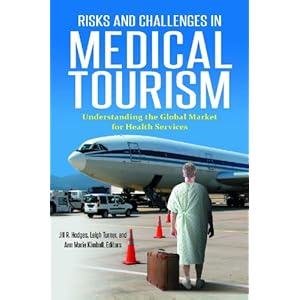
New book: Risks and Challenges in Medical Tourism: Understanding the Global Market for Health Services

A new edited volume entitled Risks and Challenges in Medical Tourism, edited by J.R. Hodges, L. Turner and A.M. Kimball, was released in July 2012. 

Here's the publisher's description: 

Risks and Challenges in Medical Tourism: Understanding the Global Market for Health Services provides an in-depth, comprehensive assessment of the benefits and risks when health care becomes a global commodity. The collection includes contributions from leading scholars in law and public policy, medicine and public health, bioethics, anthropology, health geography, and economics. This timely and informative handbook looks at medical tourism from the perspective of some of the major regions that send and receive medical tourists, including the United States, the European Union, Southeast Asia, and Latin America. Contributors examine how government agencies, medical tourism companies, international hospital chains, and other organizations promote medical tourism and the globalization of health care. The topics explored include the legal remedies available to medical tourists when procedures go awry; potential consequences when patients cross borders for medical procedures that are illegal in their home countries; the relationship of medical tourism to international spread of infectious disease; and the lack of adequate transnational policies and regulations governing the global market for health services.

Wednesday, 15 August 2012

New article on medical tourism


A new piece on medical tourism has come out by John Connell, following up on the much-cited 2006 article 'Medical tourism: Sea, sun, sand and... surgery?' in the same journal. It illustrates how far we've come in the study of medical tourism in the last six years.

Connell, J. (2012) 'Contemporary medical tourism: Conceptualisation, culture and commodification', Tourism Management. doi:10.1016/j.tourman.2012.05.009

Abstract
An overview is given of the short history and rapid rise of medical tourism, its documentation, and current knowledge and analysis of the industry. Definitions of medical tourism are limited hence who medical tourists are and how many exist are both indeterminate and inflated. Definitions often conflate medical tourism, health tourism and medical travel, and are further complicated by the variable significance of motivation, procedures and tourism. While media coverage suggests long-distance travel for surgical procedures, and the dominance of middle class European patients, much medical tourism is across nearby borders and from diasporas, and of limited medical gravity, conflicting with popular assumptions. Numbers are usually substantially less than industry and media estimates. Data must remain subject to critical scrutiny. Medical travel may be a better form of overall categorisation with medical tourism a sub-category where ‘patient-tourists’ move through their own volition. Much medical tourism is short distance and diasporic, despite being part of an increasingly global medical industry, linked to and parallel with the tourism industry. Intermediaries (medical tourism companies) are of new significance. Opportunities are diffused by word of mouth with the internet of secondary value. Quality and availability of care are key influences on medical tourism behaviour, alongside economic and cultural factors. More analysis is needed of the rationale for travel, the behaviour of medical tourists, the economic and social impact of medical tourism, the role of intermediaries, the place of medical tourism within tourism (linkages with hotels, airlines, travel agents), ethical concerns and global health restructuring.

Tuesday, 7 August 2012

New book: Medical Tourism: The Ethics, Regulation and Marketing of Health Mobility

Medical Tourism: The Ethics, Regulation and Marketing of Health Mobility (C.M. Hall, ed.) has been recently released through Routledge. I had the opportunity to contribute a chapter to the book: 'Claiming "Cultural Competence": The Promotion of Multi-ethnic Malaysia as a Medical Tourism Destination'. 

Book abstract
Medical and health tourism is a significant area of growth in the export of medical, health and tourism services. Although spas and improved well-being have long been part of the tourist experience, health tourism now includes travel for medical purposes ranging from cosmetic and dental surgery through to transplants and infertility treatment. Many countries including China, Cuba, Hungary, India, Thailand, Malaysia and Singapore actively promote and compete for the medical tourist dollar, while many developed countries also provide niche private services. However, the field of medical tourism is increasingly being subject to scrutiny and debate, particularly as a result of concerns over regulatory, ethical and wider health issues.
Drawing on a range of theoretical and methodological perspectives, this book is one of the first to critically address the substantial political, philosophical and ethical issues that arise out of the transnational practices of medical tourism. Through a series of chapters the book engages with key issues such as the role of regulatory and policy structures in influencing medical and health tourism related mobilities. These issues are investigated by considering range of developing and developed countries, medical systems and health economic perspectives.
The book adopts a multi-layered perspective to not only investigate the business and marketing practices of medical and health tourism but places these within a broader framework of contemporary globalisation, policy and practice. By doing so it opens up debate of the ethical space in which medical and health tourism operates as well as reinforce the wide ranging perspectives that exist on the subject in both the public and academic imagination.
This significant contribution will be of interest to students, academics in tourism and medical policy, trade and economic development fields.

Tuesday, 17 July 2012

New article: 'You, too, can be an international medical traveler: Reading medical travel guidebooks'


The 2012 Health & Place article written by Meghann Ormond (Wageningen University, NL) and Matt Sothern (University of St Andrews, UK) entitled 'You, too, can be an international medical traveler: Reading medical travel guidebooks' is now available online at http://dx.doi.org/10.1016/j.healthplace.2012.06.018 

Abstract

Drawing on literature on self-help and travel guide writing, this paper interrogates five international medical travel guidebooks aimed at encouraging American and British audiences to travel abroad to purchase medical care. These guidebooks articulate a three-step self-help “program” to produce a “savvy” international medical traveler. First, readers are encouraged to view their home healthcare system as dysfunctional. Second, they are encouraged to re-read destinations' healthcare landscapes as hosting excellent and accessible care. Finally, these texts explicitly enjoin readers to see themselves as active, cosmopolitan consumers whose pursuits are central to rectifying the dysfunction of their home healthcare systems.

Keywords

  • International medical travel; 
  • Patient-consumer; 
  • Intermediaries; 
  • Self-help; 
  • Travel guidebooks; 
  • Medical tourism

New project on medical tourism to Jamaica

Valorie Crooks, Rory Johnston and Jeremy Snyder (Simon Fraser University, BC, Canada) and Meghann Ormond (Wageningen University, The Netherlands) recently received funding from the Canadian Institutes of Health Research for a project entitled 'Is It Really About Sun, Sand, and Stitches? Planning for Research on Jamaica's Developing Medical Tourism Industry'.

Project Abstract:

Medical tourism (MT) occurs when patients leave their home countries to intentionally access non-emergency medical care abroad. A number of criticisms exist regarding MT, including that it threatens patients' safety, continuity of care, and abilities to give informed consent. This Planning Grant proposes activities in Jamaica to lay the foundation for an Operating Grant. We focus on Jamaica because it is actively pursuing MT development. The Operating Grant will explore if and how MT stakeholders in specific countries in the Caribbean region assess the transferability of policy and planning initiatives from other countries prior to acting on them. Assessing transferability is important with trade policies that have direct ties to population health, as is the case with MT. Working with Jamaican collaborators from various sectors, we will undertake onsite research development activities in Oct/12 that will include holding meetings with MT stakeholders and touring public and private health care facilities. In undertaking these activities we will create a network of collaborators and knowledge end users to enable an integrated knowledge translation approach to the Operating Grant being developed. MT development in Jamaica and the wider Caribbean holds important implications for Canada. Canadian patients are traveling to the Caribbean for private medical care, Canadian companies are investing in the MT sector in the region, and Canada is a signatory to global declarations that work to ensure health globally. Our proposed activities are also consistent with CIHR's global health goals. This Planning Grant is premised on the exchange of knowledge and ideas across sectors through engagement with MT stakeholders, including our collaborators, in Jamaica. In addition to developing an Operating Grant, we will write an article for Globalization & Health and prepare a short report. These outputs will be circulated widely through our own and our collaborators' networks.

Recent news on medical tourism to Jamaica:
- 'Jamaica to promote health and wellness tourism' - 13 July 2012 (http://positivetourism.com/index.php?option=com_content&view=article&id=2622:jamaica-to-promote-health-and-wellness-tourism&catid=81:health-tourism&Itemid=457)
- 'Health tourism critical to country's development - Dr Ferguson' - 12 July 2012 (http://www.jis.gov.jm/news/122-parliament/31214-health-tourism-critical-to-countrys-development-dr-ferguson)
- 'JA's health care in good hands' - 7 May 2012 (http://www.jamaicaobserver.com/columns/JA-s-health-care-in-good-hands_11410345)
- 'Negril to get new US$200 million hospital' - 25 April 2012 (http://jamaica-gleaner.com/gleaner/20120425/lead/lead7.html)
- 'Jamaica posed to benefit from US$35b health tourism industry - government seeking to develop plan to tap into market' - 22 April 2012 (http://jamaica-gleaner.com/gleaner/20120422/lead/lead2.html)
- 'MoBay: Potential health tourism centre' - 14 September 2009 (http://jamaica-gleaner.com/gleaner/20090914/news/news1.html) 

Official reports and presentations related to medical and health tourism to Jamaica:
- CEDA Report on Health and Wellness Tourism - November 2008 (http://www.onecaribbean.org/content/files/10strategyserieshwfinalcbbnexport.pdf)
- Commonwealth Secretariat's 'Jamaica medical tourism development plan' - November 2010 (http://www.thecommonwealth.org/Shared_ASP_Files/GFSR.asp?NodeID=230584&AttributeName=File)
- East, J. 'Jamaica as a health tourism destination: Pipe dream or reality?' - (http://www.google.com/url?sa=t&rct=j&q=&esrc=s&source=web&cd=1&cad=rja&ved=0CB0QFjAA&url=http%3A%2F%2Fwww.medicalassnjamaica.com%2Fpresentations%2FJamaica%2520as%2520a%2520Health%2520Tourism%2520Destination%2520-%2520Pipe%2520Dream%2520or%2520Opportunity.ppt&ei=ckeOUKq5JoWp0QWCu4HwAQ&usg=AFQjCNEm7sKFpk-zpJQMMeEHNyv3wzUicw&sig2=lkHhsgKujXsffdMIvQHNhQ)
- Girard, D. 'Overview of the Caribbean Health and Wellness Tourism Sector' 
(http://www.thecommonwealth.org/files/234637/FileName/7%20Overview%20of%20Health%20and%20Wellness%20Tourism%20-%20Diane%20Girard.pdf)
- Ministry of Health Jamaica - 'National Health Strategy 2006-2015 and Strategic Plan 2006-2010' - October 2005 (http://www2.paho.org/hq/dmdocuments/2010/National_Health_Policies-Jamaica_2006-2015.pdf.pdf)
- Ministry of Tourism and Sport Jamaica - 'Master Plan for Sustainable Tourism Development' - September 2002 (http://www.jtbonline.org/tourism_jamaica/Major%20Tourism%20Laws/Tourism%20Master%20Plan%20Full.pdf)
- Tourism Taskforce - 'Vision 2030 - Tourism Sector Plan 2009-2030' - November 2009 (http://www.vision2030.gov.jm/Portals/0/Sector_Plan/Microsoft%20Word%20-%20Vision%202030%20Jamaica%20-%20Final%20Draft%20Tourism%20Sector%20Plan%20_Sep%E2%80%A6.pdf)
- Vision 2030 (http://planipolis.iiep.unesco.org/upload/Jamaica/Jamaica_Vision_2030_Chapter_3.pdf)
- WHO - 'Jamaica: Country Cooperation Strategy 2010-2015' - November 2010 (http://www.who.int/countryfocus/cooperation_strategy/jamaicaccs2010.pdf)

Academic work published to date on medical tourism to Jamaica and the West Indies:
- Chambers, D. and McIntosh, B. (2008) 'Using Authenticity to achieve competitive advantage in medical tourism in the English speaking Caribbean', Third World Quarterly, 29(5), 915-933.
- Ramirez de Arellano, A.B. (2011) 'Medical tourism in the Caribbean', Signs, 36(2), 289-297.
- Pearcy, D., Gorodnia, D., & Lester, J. (2012) 'Using the resource-based view to explore the Jamaican health tourism sector as a service: a preliminary examination', Journal of Business Case Studies, 8, 325-334.

Sunday, 1 July 2012

Move-able bodies: material semiotics of embodied mobilities


2012 RGS-IBG Conference, Edinburgh
When: Wednesday 04 July 2012, Session 2
Where: David Hume Tower - Room 7.18, Edinburgh University
Session organisers: Lauren Wagner & Meghann Ormond, Cultural Geography, Wageningen University

Session description
Theoretical perspectives on bodies and embodiment have blossomed in recent years, so that we no longer take for granted the ordinary ways that bodies survive, thrive, move, and occupy space. These theories integrate biologically, physiologically and socially traceable catalytics of bodies (Mol 2002), but also invisible, affective, and forceful sensations of bodies (Stewart 2007). Between these two poles, we intend this session as an opening towards theorizing how bodies, and entities in assemblage with them, are materially transformed through these processes. To do so, we focus on how bodies become mobile, by empirically considering technologies, adaptations, intensities, and materialities through which bodies take up space in movement, and the ways the material and social world morphs to accommodate them. As such, we seek papers that focus on practices of embodiment or the repositioning of bodies in mobility or to become mobile.
Discussant
Alan Latham (University College London)

Papers
Cars from ‘outside’: Embodied mobile materialities of summertime diasporic visitors in Morocco
Lauren Wagner (Wageningen University, The Netherlands)
Some of the most resonant signs of the annual summer ‘return’ to Morocco of Moroccan migrants living in Europe and their diasporic families represent their cars. Images of ‘vehicles surchargées’ travelling South is part of the permanent collection in the French national museum of immigration; such vehicles are infamous for creating traffic on the route through France and Spain, towards the ferry ports on the southern shore. The 700,000 or so of these cars crossing the Mediterranean increase the tally of vehicles in Morocco by nearly 50%. European plates become as common as Moroccan ones, representing the bodies inside them as ‘maghrarba min el-kharij’ or ‘Moroccans from outside’.
This paper explores interactions and occupations facilitated by cars for these next-generation ‘Moroccans from outside’, or diasporic visitors, as they seek and explore leisure spaces in Morocco on their summer holidays. From their European departure point to their Moroccan homes and leisure spaces, cars play an important role in their experience of Morocco as branded and visible commodities and as devices for mobility. Moving through Moroccan spaces, they become materially embodied through cars: at distances private vehicles can take them, speeds at which they can travel, and sticking points that congregate them voluntarily or stop them involuntarily, rendering them invisible and visible through vehicles as being ‘Moroccan from outside’.

Embodied mobilities in sub-Saharan Africa: Children’s bodily experiences of load carrying
Gina Porter (Durham University), Kate Hampshire (Durham University), Albert Abane (University of Cape Coast, Ghana), Elsbeth Robson (Durham University / University of Malawi), Alister Munthali (University of Malawi)
This paper draws on empirical data regarding children's bodily experiences of load carrying in urban and rural areas of Ghana and Malawi. Wherever transport services are deficient, or households lack the purchasing power to acquire transport equipment or pay fares, much everyday transport work needed to sustain the family and household is delegated to young people. They tend to occupy the lowest rung in the social hierarchy and the carrying they are expected to do can be interpreted as embodied, performed and 'naturalized' social position. Young porters do not merely perform their tasks but, through the bodily positions they take up, are seen to enact their social position as servants to their (adult) masters. Carrying is thus arguably a daily reaffirmation of mobile servility. The complex intertwining of perceptions about physical capabilities and gender stereotyping supports this interpretation: trucks are too hard for girls to push, yet girls are expected to contribute more than boys when it comes to porterage. Girls are trained in the embodied skill of headloading because they will be expected to draw on this throughout their lives. The load they carry is increased gradually over time in this careful body management. They can be construed to be building up body capital (Jackson 1997). Drawing on investigations conducted by young people aged 11-19 as co-researchers, together with in-depth interviews and a survey of 2,000 children aged c. 9-18 years conducted by academic researchers, we examine the scale and potential implications of children's load carrying activity. 
Mobilising passenger bodies in international medical travel
Meghann Ormond (Wageningen University, The Netherlands)
The pursuit of medical treatment abroad has often been limited by dissuasive distances and barriers that require travellers with health conditions to tolerate long, uncomfortable hours in transit. A growing number of low-cost airlines, long-distance coach and ferry operators in Indonesia and Malaysia, however, – keen to benefit from disparities in the two countries’ health systems and improve Malaysia’s standing as a regional medical hub – are increasingly working to make medical travel more attractive and accessible. In offering faster and more frequent linkages to Malaysian hospitals to handle routine check-ups, chronic needs and evermore acute conditions, they have both expanded the physical and geo-political scope and increased the immediacy of care provision. Airlines have begun to contemplate retro-fitting their aircraft with spaces for stretchers and ambulances meet planes on airport tarmacs, foregoing traditional immigration and customs border procedures, so as to facilitate smoother cross-border transitions for an increasingly desirable mobile population of differently-abled bodies and the suitcases of cash which pay for their treatments and construct them as legitimate medical travellers in Malaysia. This paper draws on transport experiences of Indonesian medical travellers pursuing care in Malaysia in order to examine the material prosthetics that help constitute and mobilise ‘passenger bodies’ (Bissell 2010) in international medical travel.

Friday, 15 June 2012

Recent North American PhD dissertations and MA theses on international medical travel

Ackerman, S.L. (2009) 'Operating in Eden: Cosmetic surgery tourism and the politics of public and private medicine in Costa Rica', PhD dissertation, Anthropology, University of North Carolina-Chapel Hill. Online. Available HTTP: http://search.proquest.com/pqdtft/docview/304961242/fulltextPDF/13754D60DF0279B1887/5?accountid=141480

This dissertation offers an ethnographic account of North Americans' journeys to Costa Rica to undergo cosmetic surgery. I situate Costa Rica's booming medical tourism industry in a confluence of historical, economic and cultural conditions, through which Costa Rica is made attractive to North Americans, a regime of private sector expansion and state contraction is promoted, and the national medical program on which most Costa Ricans rely is transformed. In focusing on the everyday practices of patients, clinicians and workers at recuperation facilities, I consider how the desires and practices of middle class North Americans are intertwined with uncertainties about health care access and national identity in Costa Rica. The ethnography is organized around three sets of spaces through which medical tourists and their caretakers pass. The first includes popular media and web forums, where specific imaginaries of Costa Rica are produced,medical travelers are mobilized, and cosmetic surgery is normalized as a technology of self-improvement. The second is the hotel, particularly recovery hotels that cater to visiting patients from North America. I consider how the affective labor of local caretakers combines with tropical landscapes, and a discourse of personal rebirth, to move guests through a period of post-surgical liminality and to depoliticize medical services. The third set of spaces, public and private hospitals and clinics where bodies are enhanced or repaired by plastic surgeons, reveals a shadow medical and labor migration from Nicaragua that underwrites Costa Rica's affordability for North Americans. Throughout, I discuss areas of overlap, and tension, between public and private medical facilities, particularly the state's persistent subsidies of the private sector and the lived, material effects of neoliberal discourses on patients' desires, professional identities and medical practices. The dissertation illustrates that a desire for a fully integrated self is not the only type of belonging negotiated by the various actors involved in Costa Rican cosmetic surgery tourism. A constellation of national, transnational, moral and aesthetic claims to membership intersects with the provision of private medicalservices for North Americans, and I examine how the successes or failures of these claims are embodied and lived.

Dalstrom, M.D. (2010) 'Medical migrants in the US-Mexico borderlands', Anthropology, University of Wisconsin-Milwaukee. Online. Available HTTP: http://search.proquest.com/pqdtft/docview/741325370/fulltextPDF/13754ACB94B2086FB77/49?accountid=141480 

This study examines medical migration, briefly defined as the movement of people across borders for healthcare. It was conducted along the United States-Mexico border, focusing on the impacts that medial migration has on the healthcare system, patient practices, and quality of medical care in the area. Previous studies have illustrated that Americans actively pursue healthcare opportunities in Mexico, but there is little literature detailing the institutional structures and cultural beliefs that enable or encourage people to do so. This study examined the hypotheses: 1) that Americans cross the border for healthcare predominately because of lack of insurance and high medical cost, 2) that similarities to the US medical model are the primary criterion that patients use when they choose a medical provider in Mexico, and 3) that nationalism is an important component which overshadows patient safety when medical professionals frame medical tourism. Research took place over an eleven-month period in McAllen, Texas and Nuevo Progreso, Mexico. Participant observation was conducted at health clinics, dentist offices, and pharmacies in both the US and Mexico. Further research was conducted at RV Parks in Hidalgo County, TX. Additional information was gathered through interviews with medical professionals, community leaders, medical migrants, border guards, insurance companies, and medical tourism brokers. This project is important because it expands upon the previous research on medical migration to examine how healthcare inequalities, poverty, and policies influence individual healthcare decisions and options. It also contributes to understanding the various components that link the US to Mexico and some of the policy concerns that each country faces. Until the practice of medical migration is understood, we will not know the different reasons why people believe they need to go abroad for healthcare, nor will the factors that influence choice (i.e. location, practitioner, treatment, advertisements etc.) be fully realized. Through understanding the dynamics of this practice, the risks associated with traveling for healthcare can be reduced and overall patient health increased.

Darwazeh, D. (2011) 'Medical tourism: Establishing a sustainable medical facility', PhD dissertation, University of Waterloo, Canada. Online. Available HTTP:
http://uwspace.uwaterloo.ca/bitstream/10012/6343/1/Darwazeh_Durgham.pdf 

Imposing the principles of sustainable development on medical tourism is vital to maintaining the three pillars of a strong nation, namely, the environment, the economy, and the local community. The three research objectives of this thesis are: 1) to determine the primary factors that motivate foreign patients to travel abroad for medical services; 2) to define the role that stakeholders play for developing the medical tourism sector; and 3) to develop an implementable framework for establishing a sustainable medical facility. These objectives help lay the foundations for a medical tourism facility that would respond well to the future demands of international patients, and would remain competitive with other medical facilities in the global market while also improving local quality-of-life and remaining within ecological constraints. Therefore, this research adopts a case study methodology to examine a framework developed through the literature review to determine how it fits in reality. In addition, this research provides a starting point to define further the primary roles of the medical tourism network for developing the medical tourism sector.

Eissler, L.A. (2010) 'The lived experience of seeking health care through medical tourism: An interpretive phenomenological study of Alaskan patients traveling internationally for medical and dental care', PhD dissertation, University of Hawai'i at Manoa. Online. Available HTTP: http://search.proquest.com/pqdtft/docview/860744003/13754ACB94B2086FB77/6?accountid=141480 

A growing number of people from many countries are traveling internationally to obtain medical care. The purpose of this study is twofold: (a) to explore the experiences of international travel for the purpose ofmedical or dental care from the perspective of patients from Alaska and (b) to develop insight and understanding of the essence of this phenomenon. The study is conceptually oriented within a model of health seeking behavior. Using a qualitative, interpretive phenomenological design, a purposive sample of fifteen Alaskan medical tourists who have experienced international travel for the objective of medical or dental care were individually interviewed. The data was analyzed using a hermeneutic process of inquiry to uncover the essential meaning of the experience. The hermeneutic analysis of the participants' narrative accounts allowed the themes of Motivation, Research, Obtaining Care, Follow-up, Advice, and Future Health Care to emerge. Sub-themes are used to further categorize data for increased understanding. The thematic analysis provides insight into the essential structure of the lived experience of the medical tourism phenomenon. Improved understanding of medical tourism provides further information about a modern approach to health seeking behavior. The conceptual definition and model for health seeking behavior are updated. Increased understanding of the experience of obtaining health care internationally and motivation for this nature of health seeking behavior from the patient perspective is needed in the global health care arena. Nursing professionals will benefit by being better able to advocate for patients' choices in health seeking behavior, counsel regarding medical tourism options, provide follow-up health care after medicaltourism, and actively participate in global health policy discussions.

Grant, L. (2009) 'Reproductive tourism: The case of India - A feminist critical discourse analysis of Indian gestational surrogacy', MA thesis, Sociology, Lakehead University, Canada. Online. Available HTTP: http://search.proquest.com/pqdtft/docview/728078704/fulltextPDF/13754D60DF0279B1887/6?accountid=141480
Within an increasingly globalized medical community, people have begun to travel outside of their own geographic locations in order to obtain various medical procedures. Reproductive tourism is one of the latest developments of health tourism and can be understood as individuals obtaining some type of reproductive assistance from outside of their home jurisdiction. India has become a major reproductive tourist destination for foreign couples seeking gestational surrogacy services. I refer to this situation as Indian gestational surrogacy tourism. This paper uses a feminist critical discourse analysis in order to analyze media representation of Indian gestational surrogacy tourism . Indian gestational surrogacy tourism can be understood as being presented as an ethical master narrative within which discursive frames are used to argue either for or against Indian gestational surrogacy tourism. Those presenting this as a positive development use discursive frames that promote India as an ideal destination for gestational surrogacy services. Conversely, those who are critical of this practice use discursive frames that present legal, ethical and dehumanization concerns.

Lee, C.A. (2012) 'Health care at a crossroads: Medical tourism and the dismantling of Costa Rican exceptionalism', PhD dissertation, Health and Behavioral Sciences, University of Colorado-Denver. Online. Available HTTP: http://search.proquest.com/pqdtft/docview/1015169944/fulltextPDF/13754ACB94B2086FB77/51?accountid=141480
Based on a year of ethnographic fieldwork, this dissertation explores the development of the global medicaltourism industry in Costa Rica and the social, ethical, and ideological implications that its growth may have for the existing socialized health care system. This study seeks to understand the ways in which medical tourism, as a model of global neoliberal health care, affects how Costa Ricans think about delivery of and state responsibility for health care. The research draws deeply on the social, economic, political, and cultural contexts in which medical tourism is unfolding. It addresses the ideological tensions and contradictions that surroundmedical tourism, as the line between conceptions of health care as local and global, socialist and capitalist, public and private, blurs to accommodate this emerging industry. Rather than emphasizing the view of medicaltourism from the top, the focus is on local perceptions, understandings and engagements with medicaltourism. Grounded in the experiences of Costa Rican health care providers, educators, policy makers and citizens, this paper tells the story of a system in flux.

McDonald, E.A. (2011) 'Risky Embodiments: Momentum and Medical Travel in the Paris of South America'. PhD dissertation, Anthropology, Rutgers, The State University of New Jersey. Online. Available HTTP: http://search.proquest.com/pqdtft/docview/921231549/fulltextPDF/13754ACB94B2086FB77/3?accountid=141480

This dissertation examines the emerging phenomenon of transnational medical travel to Buenos Aires, Argentina based on fifteen months of fieldwork between 2006 and 2008. Ethnographic data were gathered through the observation of medical consultations and surgeries, interviews with doctors, patient coordinators, and hospital administrators, as well as living with transnational patients during their preparation for, and recovery from, surgery. Although crossing borders in order to seek out health has long existed under a variety of circumstances, with the turn of the 21st century, global biomedical services have emerged on a larger scale – wrapped within the neoliberal vernacular of the nascent “medical tourism” industry.


Miller-Thayer, J.C. (2010) 'Medical migration: Strategies for affordable care in an unaffordable system', Anthropology, University of California-Riverside. Online. Available HTTP: http://search.proquest.com/pqdtft/docview/845613349/fulltextPDF/13754ACB94B2086FB77/54?accountid=141480
Approximately 45.7 million people in the United States are uninsured and unknown numbers of this population are underinsured, severely limiting their access to medical care. To address this problem, people use innovative strategies to increase their access through cross-border care options. The U.S.-Mexico border provides unique challenges and opportunities for healthcare in this context. The lower cost of medical and dental procedures and medications in Mexico makes that country an attractive alternative for low-income populations in the United States. Thus segments of the U.S. population practice transnational medicalconsumerism in an attempt to optimize their health by using the resources available in both countries. This practice has economic benefits for the people who access healthcare at an affordable rate and for the medicalmarkets of the country providing the care. Drawing on data collected in the field in 2002, 2004, and 2005, this dissertation presents some of the complexities and dynamics of medical pluralism occurring at the U.S.-Mexico border.

Ramos, C.E. (2008) 'Crossing the border for dental care: Factors related to dental health among the South Texas border region', School of Public Health, University of Texas-Houston. Online. Available HTTP: http://search.proquest.com/pqdtft/docview/304471352/fulltextPDF/13754EF792E65C91009/10?accountid=141480
Objectives. The purpose of this thesis is to understand the underlying socioeconomic characteristics affecting dental insurance coverage, yearly dental visits, and factors related to visiting a dentist in Mexico among border region residents. Methods. Using data from the Border Epidemiological Study of Aging, dental utilization in the previous 12 months, dental visits to Mexico, and dental insurance (proxy) were calculated utilizing logistic regression. Three different models were utilized for the dependent variables adjusting for diverse socioeconomic characteristics such as gender, age, marital status, income, education, years of residence in the United States (for immigrants), English proficiency, general health status, employment and dental insurance.Results. After adjustment, diverse variables were significant for the three different models calculated.Conclusion. Although the Mexican health market constitutes a viable option for dental services for border residents, dental insurance and dental yearly visits were lower in this region when compared to national averages.

Rudra, P. (2011) 'Impacts of medical and wellness tourism centers on the communities around them: Case studies in Delhi and Kerala', PhD dissertation, Geography, Rutgers. Online. Available HTTP: http://search.proquest.com/pqdtft/docview/921335677/fulltextPDF/13754D60DF0279B1887/3?accountid=141480

Over the past decade or so the movement of patients and wellness seekers across borders, over long distances, has increased and India has been the destination of choice for many. This is private sector led growth, but the government has provided support in terms of subsidies and its promotion. With the alignment of governmental support and other enabling circumstances, many new centers-both corporate hospitals and Ayurvedic wellness centers-have opened in India. The case studies for this research were centers in Delhi, formedical tourism, and Kerala, for wellness tourism. This study involved assessing the impacts of these centers on the local communities around them, in terms ofmedical, economic, and infrastructural consequences. Another question was whether these centers formed enclaves, of varying degrees, where the impacts were focused, or were there significant benefits for these communities from the centers being there.

Rutherford, A.S. (2009) 'India health: Impact of medical tourism facilities on state health and economy', MA thesis, Political Science, Iowa State University. Online. Available HTTP: http://search.proquest.com/docview/304902236?accountid=141480 
The following study is an investigation of the impact on the health of local populations spurred by the medical tourism industry. More specifically the study explores a possible increase in life expectancy in areas surrounding medical tourism facilities in India. There are ten Indian states examined in this study; five states are host to a leading location of Apollo Hospitals, and five are not. Despite the small sample size, the chosen states present a good representation of Indian states based on size, wealth, and health indicators. The findings show that the presence of Apollo Hospital Medical Tourism facilities may lead to increased life expectancy of Indian state populations.

Saiprasert, W. (2011) 'An examination of the medical tourists' motivational behavior and perception: A structural model', PhD dissertation, Oklahoma State University. Online. Available HTTP: http://search.proquest.com/pqdtft/docview/876176923/fulltextPDF/13754ACB94B2086FB77/17?accountid=141480

The objectives of this study were to (1) examine the structural relationship of medical tourists motivational behavior and perception model; (2) assess the moderating effect of repeat visit on relationship between motivation and perceived destination image, perceived quality and perceived value, perceived quality and overall satisfaction; (3) examine the differences between international medical tourists' profiles on motivational behavior and perception; and (4) recommend medical tourism strategies in order to facilitate the medicaltourist expectations and strengthen services for future competition. Respondents were international medicaltourists travelled to Thailand. The total of 376 medical tourists participated in this study. ANOVA and independent sample T-Test were applied for the significant difference on medical tourist motivational behavior and perception. Structural equation modeling by LISREL 8.80 and hierarchical multiple regression were used to examined the causal links among constructs. Results revealed that international medical tourist motivation (attraction and opportunity) positively influence the perceived medical image. The perceived medical image also positively influence perceived quality on bothmedical staff and supporting services. Furthermore, medical staff quality also positively influences the perceived value and overall satisfaction of international medical tourists. Finally, the perceived value and overall satisfaction also positively influence the behavioral intention by word of mouth recommendation, repeat visit, and willingness to pay more. This study further found the moderating effect of frequent visit on perceived quality of and perceived value. Moreover, the results indicated that international medical tourists were significant difference on their motivational behavior and perception. This study suggested that the corporation between hospitals and government should be implemented in order to be successful as medical tourism destination.
Song, P. (2008) 'Biotech pilgrims and medical entrepreneurs: Cultural encounters from cyberspace to China', PhD dissertation, Harvard University. Online. Available HTTP: http://search.proquest.com/pqdtft/docview/304603149/13754ACB94B2086FB77/12?accountid=141480
"Biotech Pilgrims and Medical Entrepreneurs" follows the efforts of Chinese doctors and their foreign patients to cure what conventional medicine has deemed incurable. Based on 24 months of multi-sited fieldwork at high-tech medical centers in urban China, I argue that the conjunction of market-driven reforms and Internet-based communication technologies has reconfigured the quest for experimental therapies on a global scale. I develop the concept of biotech pilgrimage to explore how faith intertwines with technology and travel as patients and doctors push the boundaries of conventional medical treatment in pursuit of a therapeutic miracle. My ethnographic study highlights the crucial role of the Internet in mediating these new transnational health-seeking practices, exploring how online discussion forums have fostered a new social movement of patients, families, researchers, and doctors who cross national borders to pursue experimental therapies. My dissertation also analyzes how changes in the political economy of health care have encouraged Chinese doctors to experiment with lucrative biomedical interventions for foreign patients, transforming China's urbanmedical system into a laboratory for entrepreneurial tactics that blur the boundaries between public and private, legal and illegal, ethical and unethical. The pursuit of high-tech therapies by medical entrepreneurs is not just about making money, but also about professional ambitions and national salvation--a cultural phenomenon I frame as technonationalism. "Biotech Pilgrims and Medical Entrepreneurs" synthesizes key concerns in medical anthropology, ethnographic approaches to globalization, and the anthropology of Chinese culture and society. I examine the specific ways in which cultural values, economic pressures, and geopolitical histories engage experimental medicine on the level of lived experience. By foregrounding what is at stake for Chinese doctors and their patients from around the world, I explore how both groups deploy hope in "cutting-edge" medicine as a survival tactic to transcend the danger and uncertainty threatening their lives and their futures.
Vindrola Padros, C. (2011) 'Life and death journeys: Medical travel, cancer and children in Argentina', PhD disseration, Anthropology, University of South Florida. Online. Available HTTP: http://search.proquest.com/docview/905289231?accountid=141480 
Recent studies on the Argentine public health system have demonstrated that the lack of medical resources in different parts of the country force pediatric oncology patients and their family members to travel to Buenos Aires in order to access care. This internal migration poses difficulties for these families as travel and resettlement are expensive, lead to the separation of family members, and interrupt the child's schooling. This dissertation was designed to document the everyday life experiences of traveling families in order to understand the barriers they faced while attempting to access medical treatment and the strategies they used to surmount these obstacles.


Monday, 19 March 2012

Special issue of Developing World Bioethics

A special issue of Developing World Bioethics that Jeremy Snyder co-edited with Valorie Crooks is now out with five papers on ethical issues stemming from medical tourism and its impacts on the developing world -- See all the papers at: http://onlinelibrary.wiley.com/doi/10.1111/dewb.2012.12.issue-1/issuetoc

Saturday, 18 February 2012

Transnational mobility and the Malaysian health system in transition - 28 Feb. 2012, Kuala Lumpur


Seminar: Transnational mobility and the Malaysian health system in transition
Date: Tuesday, 28 February 2012

Venue: Department of Social & Preventive Medicine Conference Room, Faculty of Medicine (Building J on the map), University of Malaya, Kuala Lumpur, Malaysia

Description
Across Southeast Asia, healthcare liberalisation is leading to profound social, economic and political changes. This is manifest in the shifting onus of care from the state to private individuals as well as the growing transnational flows of people, goods and services linked to health and care in the wake of trade agreements (e.g., AFTA and GATS) that treat health care as a commodity. In Malaysia, ‘healthcare travel’ has been seen as a driver for economic growth for over a decade. Significant investment is being made in the infrastructure and human capital necessary to promote the country as both a global and regional medical hub to foreign patients. At the same time, such investment raises concerns about the commodification of health care, the potential for increasing internal brain-drain and the risk that investment in private health care may detract from and potentially impoverish the public healthcare system. 


This seminar was geared towards fostering dialogue on the economic, social, political and ethical complexities posed by transnational mobility on health systems within Southeast Asia more broadly and Malaysia in particular. Participants, hailing from the Netherlands, Japan, Indonesia, Burma, Singapore and Malaysia, included academicians, research students, representatives of civil society, medical travel entrepreneurs as well as the private-sector Pantai Hospital group and the government-sponsored Malaysia Healthcare Travel Council.  Presentations included research findings from the field as well as agendas for further research in the context of regional integration of the private healthcare sector and incipient portability of healthcare benefits. This event was made possible thanks to financial and logistical support from the Cultural Geography Chair Group (Wageningen University) and Centre for Population Health (University of Malaya).

Programme

10:15-10:30  Tea
10:30-10:45  Welcome
10:45-12:00  Session 1 – Situating Medical Tourism in Southeast Asia
·         Presenters
o   WONG Kee Mun and Ghazali MUSA, University of Malaya (Malaysia) – ‘Medical Tourism in Thailand, Singapore, Malaysia, and India’
o   Ghazali MUSA, Darmesh R. DOSHI, WONG Kee Mun and Thinaranjeney THIRUMOORTHY, University of Malaya (Malaysia) – ‘Travel Motivation and Satisfaction of Health Tourists in Kuala Lumpur’
o   Mayumi ONO, Waseda University (Japan) – ‘Making a Haven for Elderly Care: Japanese Retirement Migration to Malaysia’
·         Chair
o   Meghann ORMOND, Wageningen University (The Netherlands)

12:30-13:30  Lunch
13:30-15:00  Session 2 – Health Care Commodification, Access, Entitlements and Equity
·         Presenters
o   David REISMAN, Nanyang Technical University (Singapore) – ‘Medical Tourism: Southeast Asia Plans Ahead’
o   PHUA Kai Lit, Monash University (Malaysia) – ‘The Growth of Cross-Border Medical Tourism: Investigating Possible Impacts on the Health Care Systems of Host (Destination) Countries’
o   Meghann ORMOND and Dian Sulianti, Wageningen University (The Netherlands) – ‘Respondingto the Cross-Border Pursuit of Health Care in East Malaysia’ (PDF)
·         Chair
o   CHAN Chee Khoon, University of Malaya (Malaysia)

15:00-15:15 Tea break
15:15-16:45 Session 3 – Panel Discussion: State, Capital and Transnational Health Care
·         Panellists
o   CHAN Chee Khoon, University of Malaya (Malaysia)
o   Mary WONG Lai Lin, Malaysia Healthcare Travel Council (Malaysia)
o   Suresh PONNUDURAI, MalaysiaHealthcare.com (Malaysia)
o   David QUEK Kwang Leng, Pantai Hospital Kuala Lumpur and Malaysian Medical Association (Malaysia)
·         Moderator
              o   David REISMAN, Nanyang Technical University (Singapore)
16:45-17:00 Wrap-up


Event organisers / Contact persons 
  • Chan Chee Khoon (ckchan50 [at] yahoo.com), Head of Health Policy & Management Unit, Department of Social & Preventive Medicine, Faculty of Medicine, University of Malaya, Malaysia
  • Meghann Ormond (meghann.ormond [at] wur.nl), Assistant Professor, Cultural Geography Chair Group, Wageningen University, The Netherlands
Acknowledgements
This event has been made possible thanks to financial support from Wageningen University's Cultural Geography Chair Group and University of Malaya's Department of Social & Preventive Medicine.


Presentation abstracts 

CHAN Chee Khoon, University of Malaya (Malaysia); Mary WONG Lai Lin, Malaysia Healthcare Travel Council (Malaysia); Suresh PONNUDURAI, MalaysiaHealthcare.com (Malaysia); David QUEK, Pantai Hospital Kuala Lumpur and Malaysian Medical Association (Malaysia)
Panel discussion: State, Capital and Transnational Health Care
In recent years, Malaysia's sovereign wealth fund, Khazanah, has emerged as the controlling shareholder of Southeast Asia's largest private healthcare conglomerate: Parkway Pantai, anchored by its hospitals in Malaysia, Singapore and other countries. The panel will explore how this might intersect with patterns of cross-border medical travel, looking at mobility of patients and of investment as well as the role of diasporic communities. Each panellist will take 10-15 minutes to make key points, as a prelude to interactive discussion.

Ghazali MUSA, Darmesh R. DOSHI, WONG Kee Mun and Thinaranjeney THIRUMOORTHY, University of Malaya (Malaysia)
Travel Motivation and Satisfaction of Health Tourists in Kuala Lumpur
Despite recording the highest growth among tourism sub-sectors, little is known empirically about travel behaviour among inbound medical tourists in Malaysia. This study examines demographic profile, travel motivation, travel satisfaction, healthcare consumption and expenditure behaviour among them in Kuala Lumpur. The paper is unique in providing empirical evidence of the city’s unique selling points (pull factors) in attracting inbound medical tourists. The paper contributes to knowledge on dimensions and items that are pertinent in measuring medical tourists’ satisfaction. It also highlights the potential economic contribution and some managerial implications in terms of marketing and product development.

Mayumi ONO, Waseda University (Japan)
Making a Haven for Elderly Care: Japanese Retirement Migration to Malaysia
This paper explores emerging transnational mobility among elderly Japanese seeking care and the commoditization of care for guest consumer-patients in Malaysia. Elderly care, as well as medical care, has been given ‘domestically’ within the nation-state of modern societies. Care, however, has been in transition and has become a transnational object of commoditization for the industry and the target of consumption for individuals in the domain of global trade. Since the late 1990s, Japanese international retirement migration to Southeast Asian countries where retirement programs for foreign retirees are available, such as in Malaysia, Thailand, Philippines, and Indonesia, has been increasing. The government of Malaysia, the country which has been recognized as the most desirable destination among the Japanese, has implemented tourism policies, the “Malaysia My Second Home Programme” (MM2H) and others that focus on medical tourism, to attract affluent foreign retirees in order to stimulate the economy. Although Japanese international retirement migration is mostly conducted by healthy retirees around sixty years of age, it consequently has created a new stream of people leaving Japan to seek elderly care. This paper argues that the flow of Japanese retirement migrants generates a transnational mobility for care and therefore facilitates the Malaysian healthcare industry’s catering for foreign retirees.

Meghann ORMOND, Wageningen University (The Netherlands)
Responding to the Cross-Border Pursuit of Health Care in East Malaysia
There is a disjuncture between Malaysia’s growing desire for foreign patient-consumers from high-income countries and the corresponding governmental and private sector investments in spectacular medical tourism infrastructure, on the one hand, and the foundational yet relatively invisible role that everyday intra-regional medical travellers from nearby lower-income countries – who comprise the bulk of medical travellers to Malaysia – actually play in constituting and sustaining the country’s principal medical travel destinations, on the other. Seeking to bring attention to the relevance and realities of these more everyday medically-motivated mobilities, this paper draw on current fieldwork exploring the pursuit of health care by Indonesian patient-consumers in Kuching, capital of the East Malaysian state of Sarawak, where private hospitals actively court and receive high numbers of Indonesians coming by land and air from neighbouring Kalimantan districts. The paper argues for greater consideration of the political, economic and social ties fostered by these everyday medical mobilities and their potential for enhancing regional development.

PHUA Kai Lit, Monash University (Malaysia)
The Growth of Cross-Border Medical Tourism: Investigating Possible Impacts on the Health Care Systems of Host (Destination) Countries
Cross-border medical tourism (a variety of health tourism) is likely to have a major impact on the health care systems of host or destination countries. In this presentation, I argue that it needs to be studied from a system-wide perspective. In other words, how would it impact on the following aspects of a destination country's health system: human resources, facilities, health information systems, technology, financing/economic aspects, and governance/health policy?  

David REISMAN, Nanyang Technical University (Singapore)
Medical Tourism: Southeast Asia Plans Ahead
The old medical tourism was trips to the West. It was for the elite only. The new medical tourism extends to the East and the South and includes the rapidly expanding middle classes. The poor do not benefit directly, although they may enjoy the spillovers from employment, growth and cross-subsidisation. The paper explains why the trade exists and what the social and economic implications are for both the importers and the exporters. At each stage it assesses the ethical implications for class and commodification. Globalisation cannot be reversed. The multinationals and the insurance companies are a fact of life. What can be done is to adapt the inevitable to the needs of consumer-patients who will want something more from medicine than utility, profit and product image. The implication is that there must be a managed market but on a world scale at a time when even State-run corporations – and the National Health – are edging ever closer to what The Economist calls ‘State capitalism’. The paper begins with the misleading name of tourism. It then discusses the GATS four modes before proceeding to an assessment of why patients travel for medical care. In doing this it also evaluates the preconditions for care and the possibility that institutional changes will reverse the flow. At the end it applies the results to Singapore.

WONG Kee Mun and Ghazali MUSA, University of Malaya (Malaysia)
Medical Tourism in Thailand, Singapore, Malaysia, and India
This paper examines medical tourism in four countries in Asia (Thailand, Singapore, Malaysia, and India) all of which are actively developing and promoting medical tourism as a part of their economic activities. It begins with the introductory concept and definition of medical tourism and is followed by a discussion on travel motivations among medical tourists who visit these countries. The detailed description of medical tourism development in all four countries will be examined which includes hospitals, medical tourism products, government support and promotions. Before making a final conclusion, some issues and challenges in developing medical tourism in the region has been discussed.